What Is Conscious Connected Breathwork and How Can It Help You?

I have always been fascinated by healing, self-reflection, and finding freedom within. I knew how much I was holding in my body, but I recognised that so much of it I couldn't access through talking.
On the surface, everything looked fine. I was getting on with life, doing what needed to be done. But underneath, there was a steady hum of tension. A tightness in my chest, a restless mind, and a sense that I couldn't fully access myself. There was always this undercurrent of sadness that no therapy was able to reach.
I didn't have the language for it then. I just knew something felt held.
It wasn't until I began working with my breath that things started to shift. My first experience of conscious connected breathwork was so powerful that the sadness I had always carried lifted. At that moment I knew I wanted to share this with others. I recognised it as the perfect partner to the therapeutic work I already offered.
Conscious connected breathwork has since become one of the most powerful tools I use, both personally and in my work with others, to support emotional release, nervous system regulation, and a deeper connection to self.
If you have come across breathwork and are wondering what it actually involves, and whether it might help you, this will give you a clear and honest place to begin.
At a Glance
| What it is | A continuous, circular breathing practice with no pause between inhale and exhale |
| What it supports | Emotional release, nervous system regulation, deeper connection to self |
| Typical format | Guided 1:1 sessions or small groups, in person or online |
| Who it is for | Anyone feeling stuck in stress, holding unspoken tension, or wanting to go deeper than talking therapy allows |
| Experience needed | None. You only need a willingness to meet yourself where you are |
What Is Conscious Connected Breathwork?
Conscious connected breathwork is a simple but transformative breathing practice. It involves breathing in a continuous, circular rhythm, with no pause between the inhale and the exhale.
This might sound small, but it changes everything.
Most of the time, our breath is unconscious and often restricted, especially when we are stressed or overwhelmed. We hold it without realising, or we breathe in a shallow, controlled way that mirrors what is happening in the nervous system.
This style of breathwork gently interrupts that pattern. By breathing continuously, the body begins to open. Energy starts to move. And the nervous system is invited into a different state, one where it can begin to process, release, and restore balance.
What makes this approach so powerful is that it does not rely on talking or analysing. It works directly with the body, where so much of our stress, emotion, and past experience is stored.
How It Differs From Everyday Breathing
| Everyday breath | Conscious connected breath |
|---|---|
| Unconscious and reactive | Intentional and guided |
| Short pauses between inhale and exhale | Continuous, circular, no pausing |
| Often shallow when we are stressed | Full, open, through the whole body |
| Mirrors the nervous system state | Begins to shift the nervous system state |
| Holds tension in place | Invites tension to move and release |
What Happens in a Session?
One of the most common questions I hear is, "what will it actually feel like?"
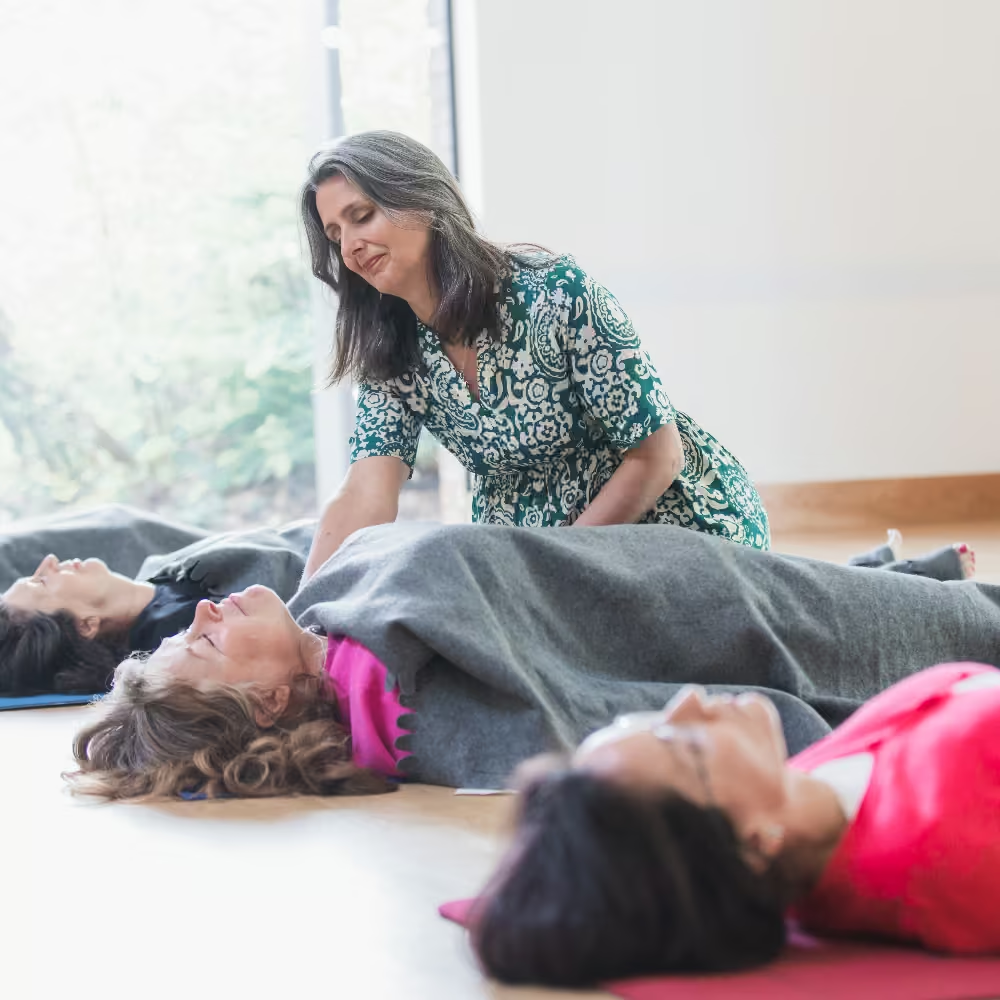
Each session is unique, because each person brings their own history, capacity, and needs. But there is a general flow that creates safety and structure. I offer sessions as 1:1 work or within a small group circle.
The Four Phases of a Session
| Phase | What happens | Why it matters |
|---|---|---|
| 1. Arrive | Landing in the body, gentle grounding, noticing what is present | Creates safety before anything is asked of you |
| 2. Breathe | Guided into the continuous, circular breathing pattern | Invites the nervous system to begin shifting state |
| 3. Deepen | Sensations, emotions, imagery or insight can arise | The body brings forward only what it is ready to process |
| 4. Integrate | Breath slows, stillness returns, space to absorb the shift | Allows the nervous system to settle and the work to hold |
We begin slowly. There is space to arrive, to land in the body, and to notice what is present. This might include gentle grounding, a moment of reflection, or simply becoming aware of your breath as it is.
From there, I guide you into the breathing pattern. At first, it can feel unfamiliar. The body often resists change, particularly if it is used to holding tension or staying in control. With guidance and reassurance, the breath begins to find its own rhythm.
As the session deepens, different experiences can arise. You might notice physical sensations such as tingling, warmth, or movement in the body. Some people feel emotions rising, sometimes connected to something they recognise, sometimes not. Others experience clarity, imagery, or insight. And for some, it is simply a deep release or a profound sense of calm.
There is no "right" way to experience it. Your body will only bring forward what it feels ready to process.
Held Through Embodiment
The way I hold this work is rooted in embodiment. You may have seen breathwork portrayed as something intense or overwhelming, with people losing control or becoming completely consumed by the experience. While that can be part of some approaches, it is not the focus of mine.
I guide you to stay present with your body throughout. Rather than moving away from yourself, the invitation is to come closer, to remain connected to the sensations, the emotions, and what is arising in each moment.
From my experience, this is where the deeper healing happens. Not in performing or pushing for a release, but in gently increasing your capacity to be with what is there. To feel it, to allow it, and to stay anchored in yourself as it moves.
This is what supports a more integrated and lasting shift. A reconnection not just to your breath, but to your truth, your body, and your own inner steadiness.
Towards the end, we slow everything down again. This integration phase is essential. It allows the nervous system to settle and supports the body in absorbing what has shifted.
The Science Behind Breathwork
While breathwork can feel deeply personal, and at times even spiritual, there is also a strong physiological foundation to what is happening.
Your breath is directly connected to your nervous system. When you are stressed, anxious, or overwhelmed, your breathing often becomes shallow and rapid. This reinforces a state of alertness in the body, signalling that something is not safe. Over time, this can become a pattern that keeps you in a loop of tension and activation.
Conscious connected breathwork begins to interrupt that loop. By changing the rhythm and depth of your breathing, you send new signals to the brain and body. This can support a shift out of a chronic stress response and into a state where the body can rest, repair, and process more effectively.
If you often feel stuck in cycles of stress or overactivation, this connects closely with the chronic activation patterns I explore in my article on what complex PTSD is and how healing happens. These patterns build quietly over time, and they can be difficult to shift through thinking alone.
Breathwork also influences levels of oxygen and carbon dioxide in the body, which can affect brain activity and increase access to stored emotional material. In simple terms, it creates the internal conditions for release.
The Benefits of Breathwork
People often come to breathwork looking for relief from stress, anxiety, or emotional heaviness. What they often discover is something deeper.
| Benefit | What this can feel like |
|---|---|
| Release of stored tension and emotion | A lightness in the chest, a softening in the body |
| A greater sense of calm and grounding | Slower, more settled thinking |
| Improved connection to the body | Noticing signals you had been overriding |
| Increased clarity and self-awareness | More honest contact with what you actually need |
| Reduced anxiety and overwhelm | More capacity to stay with difficult feelings without shutting down |
| A deeper sense of inner steadiness | A quiet confidence that does not depend on things outside you |
Over time, there can also be a shift in how you relate to yourself. Instead of pushing things down or constantly moving past your own needs, you begin to listen more closely. There is often a growing sense of trust in your body and in your own inner guidance.
If you are curious about the wider body-based approach to healing, my article on why talking alone is not enough for true healing explores why bringing the body into the work matters so much.
Who Is Conscious Connected Breathwork For?
Conscious connected breathwork can support a wide range of people. It is particularly helpful if you:
- Feel stuck in ongoing stress, anxiety, or overwhelm
- Find it difficult to switch off or fully relax
- Sense there is something deeper you have not yet accessed
- Have done talking-based therapy but feel things are still held in the body
- Are moving through a period of change, uncertainty, or transition
You do not need any previous experience. You do not need to know how to "do it right". The only thing that matters is a willingness to meet yourself where you are.
For many, this work sits alongside other therapeutic support. If you are working with complex or long-held patterns, you may also find my page on complex trauma (C-PTSD) helpful, and my article on understanding defence mechanisms gives context for why the body holds on so tightly in the first place.
What to Expect Afterwards
After a session, many people describe feeling lighter, calmer, or more spacious. Your mind can have a stillness you have never experienced before.
Sometimes the shift is immediate. Other times, it unfolds more gradually over the hours or days that follow.
It is also normal to feel a little tender or reflective. This does not mean anything has gone wrong. It often means something has moved. The body may continue to process and integrate after the session has finished.
Gentle Support for Integration
| Supports integration | Less helpful afterwards |
|---|---|
| Rest and a slower pace | Jumping straight into a demanding meeting |
| Gentle movement such as walking or stretching | Intense exercise or stimulants |
| Time in nature | A noisy, overstimulating environment |
| Journalling what you noticed | Pressuring yourself to "make sense" of it all at once |
| Warm food, water, and early sleep | Late nights or heavy social plans |
Giving yourself space afterwards can make a real difference. You might also enjoy my release tension to the earth meditation session as a gentle way to continue the work at home.
A Different Way of Relating to Yourself
Over time, I have come to see that breathwork is not just about release. It is about relationship.
- A relationship with your body, learning to listen rather than override
- A relationship with your emotions, allowing them rather than suppressing them
- A relationship with your inner voice, hearing what is true beneath the noise
From that place, something begins to shift. There is often more space, more clarity, and a deeper sense of being anchored in yourself.
How to Get Started with Breathwork
If something in this resonates, the next step does not need to be a big one. It might simply be noticing your breath throughout the day, when it becomes shallow, tight, or held. Or it might be experiencing a guided session, where you are supported to explore this more deeply in a safe and held space.
Here are a few gentle ways to begin:
- Try a free guided breathwork session from home
- Join an in-person conscious connected breathwork circle
- Come away for The Art of Holding Both retreat
- Explore breathwork as part of your healing journey
- Book a free introductory call to talk it through
This work is not about fixing you. It is about creating the conditions where your body can begin to unwind what it has been holding, gently, safely, and at its own pace.
Frequently Asked Questions
Is conscious connected breathwork safe?
For most people, yes. It is a gentle, guided practice and I hold each session with care. If you have a history of severe cardiovascular conditions, epilepsy, recent surgery, or are pregnant, we will talk through whether this is the right time and what adjustments to make. A free introductory call is the best place to explore this together.
How is it different from meditation or pranayama?
Meditation often focuses on observing the breath as it naturally is. Pranayama uses specific, structured breathing techniques from yogic tradition. Conscious connected breathwork uses one simple pattern, a continuous circular breath, held for a longer period, which allows the body to move into a different state and release what it has been holding.
Will I cry, shake, or lose control?
Some people have big emotional releases. Others do not. Both are completely normal. Because I hold this work through embodiment, the focus is on staying connected to yourself rather than being overwhelmed. You are always in charge of your own pace.
How many sessions will I need?
There is no set number. Some people experience a meaningful shift in a single session. For deeper patterns, especially those tied to long-held stress or complex trauma, a series of sessions tends to be more supportive. We can discuss what feels right for you.
Can I do breathwork if I have anxiety?
Yes, and many people come to breathwork because of anxiety. The practice is especially supportive for settling an overactive nervous system. If you are very activated, we start slowly and build capacity. You never have to push past what feels manageable.
Do you offer sessions in person or online?
Both. I offer 1:1 sessions, small in-person circles near Kingston upon Thames, and The Circle, my weekly online group for women. You can see what is currently running on the courses and events page.